Book Review: Very, Very, Very Dreadful: The Influenza Pandemic of 1918

The book Very, Very, Very Dreadful: The Influenza Pandemic of 1918 by Albert Marrin reads like a middle school social studies textbook: simple, but informative. It is broken into five parts. The first two discuss the history of pandemics and how disease spreads during war. The next two talking about the pandemic start and its different waves. And finally, the science that has studied the disease since that time.

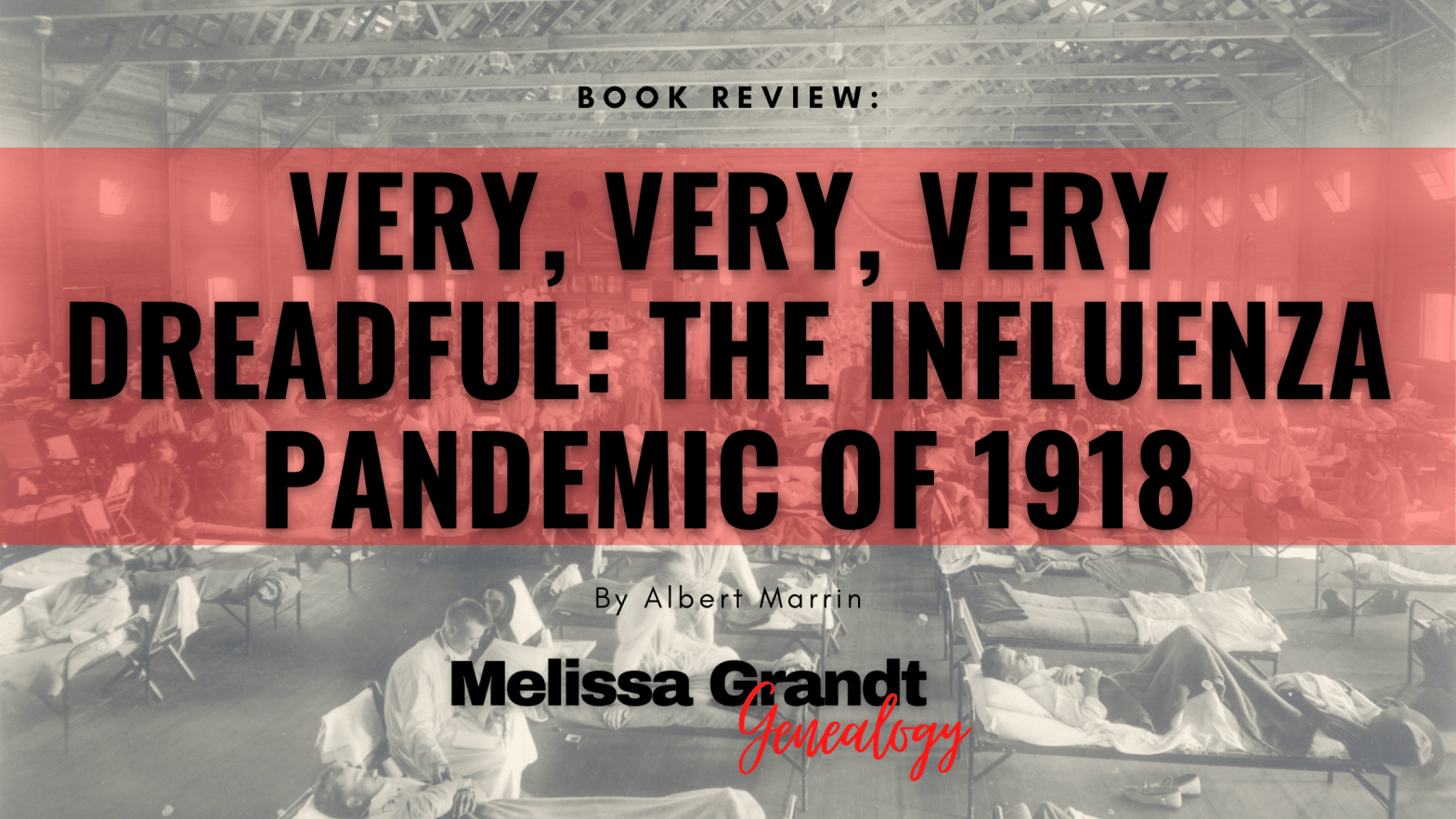
“By the end of October [1918], the hospital [at Camp Devens outside of Boston] counted 17,400 admissions for[influenza and pneumonia]. … ‘Every inch of available space was used…three miles of hospital corridors were lined on both sides with cots.” … Deaths skyrocketed, averaging 100 a day. [A private] remembered 374 patients dying in a single night.”


Marrin, Albert, Very, Very, Very Dreadful: The Influenza Pandemic of 1918 (Alfred A. Knopf, an imprint of Random House Children’s Books, a division of Penguin Random House LLC (New York) : 2018), p. 65; hardcover at Schaumburg Township District Library (130 South Roselle Road, Schaumburg, Illinois, Call Number: J 614.518 MARRIN, A); ISBN 9781101931462.

The book continues to discuss courses of treatment that rarely worked until the disease itself seemed to vanish in 1920. And while there were epidemics and pandemics after this one, they did not have the reach, nor were as lethal, as this strain in 1918.

“Americans today are well aware of the threat posed by pandemics. Novelists and filmmakers have created fictional accounts of viral catastrophes.”

Marrin, Albert, Very, Very, Very Dreadful: The Influenza Pandemic of 1918 (Alfred A. Knopf, an imprint of Random House Children’s Books, a division of Penguin Random House LLC (New York) : 2018), p. 156.

Interspersed with images and graphics from the time period, readers are brought to the present research involving the H1N1 virus.

Unknown to the author at the time of publication (2018), the COVID pandemic of 2020 would echo several of the points he makes in the final pages of his publication:

“The pandemic would have a cascading effect. Always eager for a sensational story, the media, particularly television, would spread panic. The labor force, because of sickness, fear, or having to tend to sick family members, would not report for work. Soon the economy would come to a standstill…Growing shortages of vital goods…would bring chaos. … Hospitals, mortuaries, and cemeteries would overflow as in 1918, only more so. “

Marrin, Albert, Very, Very, Very Dreadful: The Influenza Pandemic of 1918 (Alfred A. Knopf, an imprint of Random House Children’s Books, a division of Penguin Random House LLC (New York) : 2018), p. 157.

If you are looking for an overview of the Influenza Pandemic of 1918, or some background reading on the time period, this would be a good first stop in your research. But, it also leaves room for readers to dig further for more detailed information. Get your copy on Amazon here or through your local library.

Albert Marrin. Very, Very, Very Dreadful: The Influenza Pandemic of 1918. Alfred A. Knopf, an imprint of Random House Children’s Books, a division of Penguin Random House LLC (New York) : 2018; ISBN 9781101931462.

Similar books about the Influenza Pandemic or other pandemics that you may also enjoy:

Hey, just a heads up: My blog posts and email newsletters may contain affiliate links! If you buy something through one of these links, you won’t pay anything extra, but I’ll get a small commission, which helps me keep doing what I love. Thanks!
Four Weeks in Oxford, Iowa: October 1918

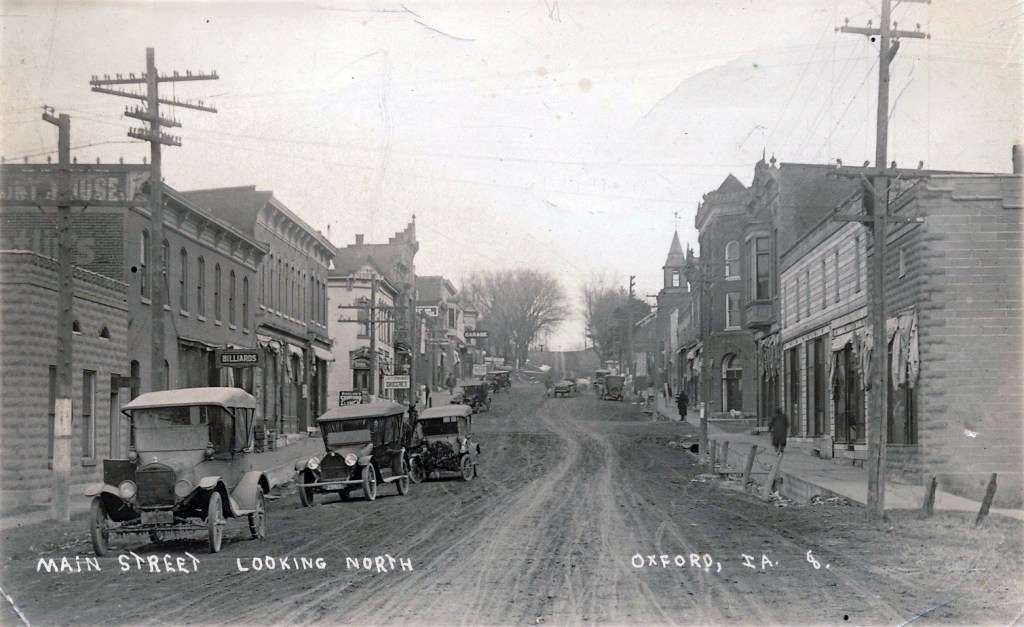
In the fall of 1918, the small hamlet of Oxford, Iowa numbered between 500-600 inhabitants. Typical Iowa fall activities were taking place: the school year resumed on September 3rd, Iowa Hawkeye football season had started September 28th, and crops were ready to harvest.

View of Main Street, Oxford, Iowa, looking north, circa 1915.
Main Street Looking North, Oxford, Iowa. abt. 1915 (“Main Street Looking North,” posted 2018).

Having lived through the COVID lockdown in 2020, it almost feels like watching a horror movie when you can see the killer behind the main characters and you find yourself screaming at the screen, trying to warn them. You know that an outbreak is imminent. 


October 3: the Oxford Leader reported on the new school year,

“Once more the teachers and pupils of the Oxford Public School have taken up their duties and are working heartily for and with one another. Every indication is toward a bigger, better school year than was the past school year. …”

“Back on the Job,” article, Oxford Leader (Oxford, Iowa), 3 Oct 1918, p. 1, col. 5; digital images, NewspaperArchive (https://access-newspaperarchive-com.proxy.stdl.org/us/iowa/oxford/oxford-leader/1918/10-03/ : accessed 22 July 2022).

One death reported: William E. Floerchinger

October 7: the school board closed school for “an indefinite length of time in order to prevent the spreading of influenza of which there are over fifty cases now in town.”

“Schools and churches, playhouses, moving picture shows, etc., were ordered closed Monday night by the board of health…as a medium of fighting the Spanish influenza. Other public places, public gatherings, lodge meetings, etc., were declared taboo for the time being, and the order becomes effective immediately.”

 “Schools to Close,” article, Oxford Leader (Oxford, Iowa), 10 Oct 1918, p. 1, col. 3; digital images, NewspaperArchives (https://access-newspaperarchive-com.proxy.stdl.org/us/iowa/oxford/oxford-leader/1918/10-10/ : accessed 20 July 2022).

There were no tests to confirm and diagnose that someone was afflicted with “the Spanish influenza”. And there were no medications effective in treating it, nor machines to assist in breathing or intensive care units at hospitals. 

The identified symptoms included: 

  • Sudden and high fever
  • Dry cough
  • Headache & body aches
  • Sore throat
  • Chills
  • Runny nose
  • Loss of appetite
  • Fatigue

Often, patients developed pneumonia and other respiratory illnesses, which resulted in their deaths. Some even died the same day they became ill. 

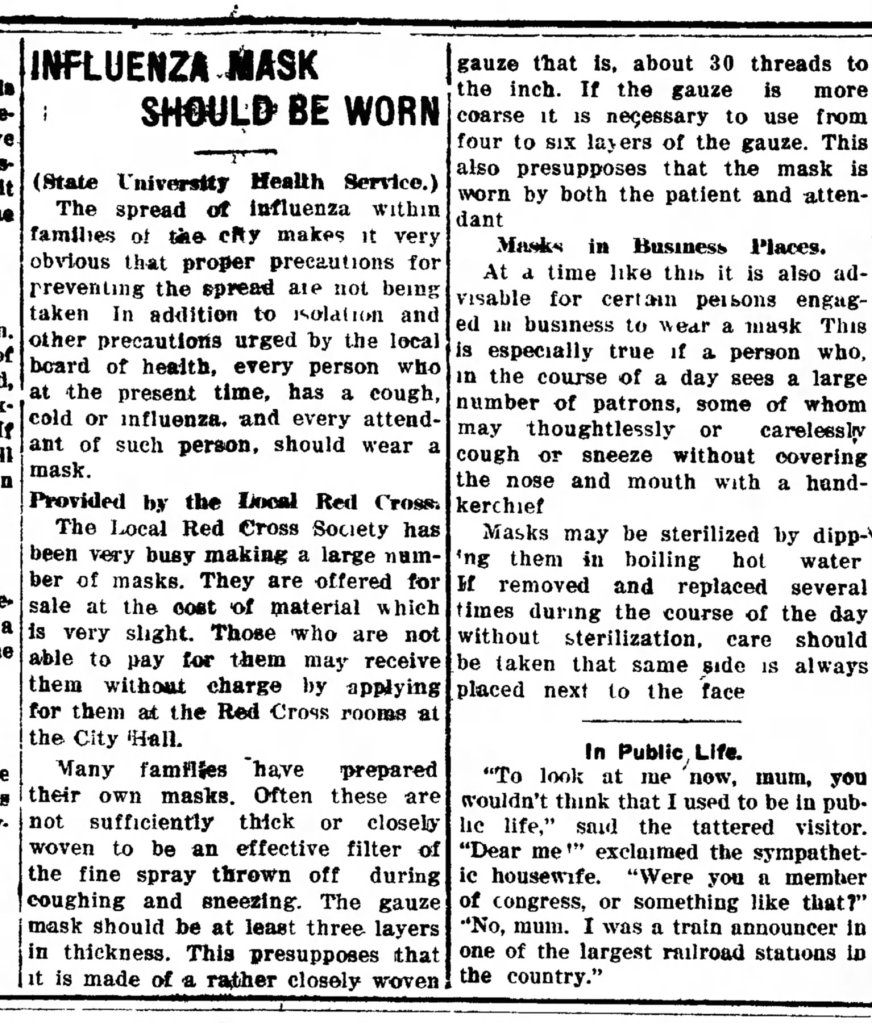
For communities that implemented prevention methods, there were no nationwide mandates. They closed public spaces like schools and churches, recommended wearing masks and washing hands.

State University Health Service recommends wearing masks.

October 10: 50 cases and 1 death reported.

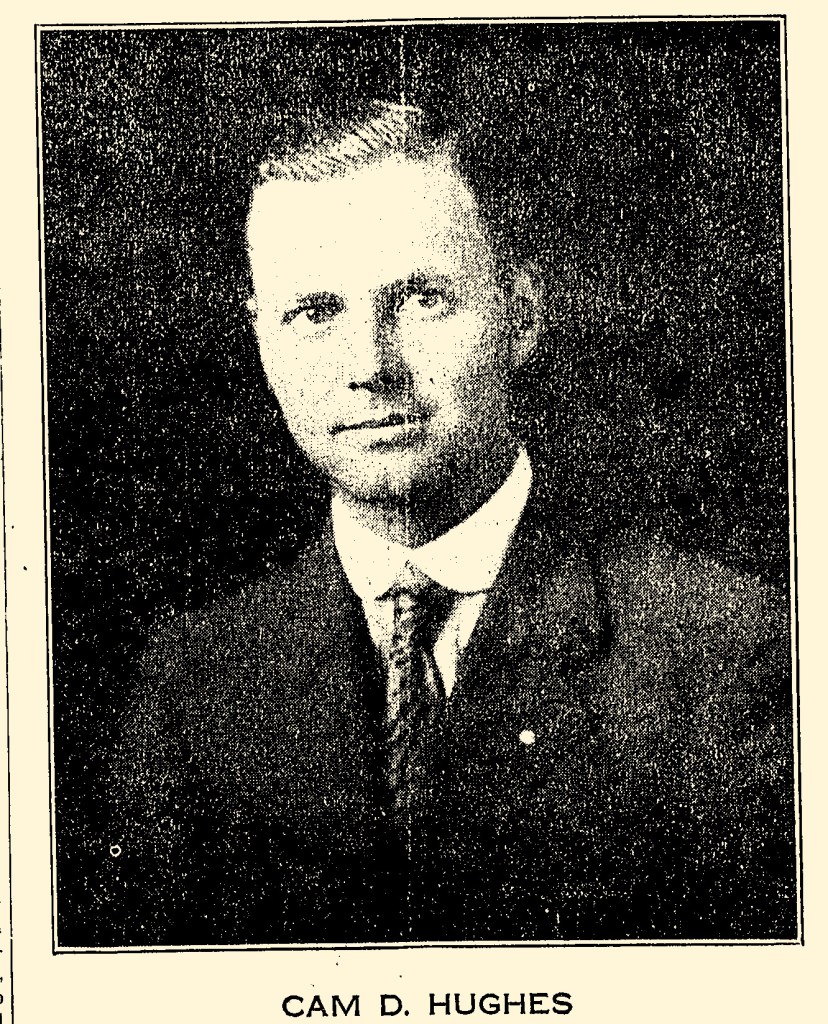
October 14: Cam DeLoss Hughes, local mercantile proprietor, died October 14, 1918 at his home at the age of 30 years old, and left a wife, Anna, and a 1 year old daughter, Patricia (“Death Toll Numbers Eight,” 1918).

 “Death Toll Numbers Eight,” article, Oxford Leader (Oxford, Iowa), 17 Oct 1918, p. 1, col. 3-6; digital images, NewspaperArchive (https://access-newspaperarchive-com.proxy.stdl.org/us/iowa/oxford/oxford-leader/1918/10-17/ : accessed 20 July 2022).

October 15: The day after Cam Hughes’ funeral, the mayor of Oxford

“reported 124 cases to the State Board of Health. These were all in the city limits, and, as he had no authority to report those just outside, the number in the vicinity of Oxford will be many more. …. The quarantine has not been raised here as yet and will not as long as new cases continue to develop. Nothing of a public nature is allowed, not even funerals.”

“The Influenza Does Its Work,” article, Oxford Leader (Oxford, Iowa), 17 Oct 1918, p. 1, col. 1; digital images, NewspaperArchive (https://access-newspaperarchive-com.proxy.stdl.org/us/iowa/oxford/oxford-leader/1918/10-17/ : accessed 20 July 2022).

At this same time, the Oxford school board decided to extend a “two week vacation in order to give the pupils the chance to help gather the large corn crop in this vicinity…..”

October 17: 124 new cases with 8 deaths reported.

October 23: The state draft board would issue a “[cancellation] of the draft order of Oct. 23, when 3900 Iowa boys were to go to Camp Greenleaf…..The movement of troops is suspended because of the influenza situation.”

October 24: Zero new cases and zero deaths reported in Oxford. 2,526 new cases and 27 deaths reported across the state of Iowa in the previous 24 hours.

October 26: The quarantine in Oxford was lifted. Schools and churches reopened, meetings and movie houses resumed normal services.

“The influenza has about subsided, at least in Oxford. There is not a single case inside the city limits and very few close around. There are a few with severe colds and other slight ailments, but the real “Flu’ is gone and we hope it will not return.”

“No More Influenza,” article, Oxford Leader (Oxford, Iowa), 31 Oct 1918, p. 1, col. 4; digital images, NewspaperArchive (https://access-newspaperarchive-com.proxy.stdl.org/us/iowa/oxford/oxford-leader/1918/10-31/ : accessed 20 July 2022).

Mention of the “Spanish Influenza” continue sporadically until February 1920 when the Oxford and Cosgrove schools closed due to “prevalence of Spanish Influenza in both communities.” But there does not appear to be the panic seen in previous reports.

“There seems to be an unusual amount of the disease in the vicinity, but as yet no cases have reached the critical stage.”

“Schools Closed Because of Flu,” article, Oxford Leader (Oxford, Iowa), 12 Feb 1920, p. 1, col. 2; digital images, NewspaperArchive (https://access-newspaperarchive-com.proxy.stdl.org/us/iowa/oxford/oxford-leader/1920/02-12/ : accessed 11 Sep 2022).

“Life in much of America came to a standstill in October 1918 as municipalities shuttered public gathering places such as schools, churches, theaters and saloons. With the Centers for Disease Control and Prevention still decades away from establishment, however, responses to the pandemic varied from city to city. “

Christopher Klein, “Why October 1918 Was America’s Deadliest Month Ever: It wasn’t because of World War I,” online article published 5 October 2018, History (https://www.history.com/news/spanish-flu-deaths-october-1918 : accessed 22 July 2022).

Almost 200K Americans died from the disease in October 1918 alone. And their loss was felt deeply in the Oxford community.

======

Sign up for my monthly newsletter here to keep informed of articles like this, book reviews, tips, freebies, and more!

======

Sources Used:

Hey, just a heads up: My blog posts and email newsletters may contain affiliate links! If you buy something through one of these links, you won’t pay anything extra, but I’ll get a small commission, which helps me keep doing what I love. Thanks!
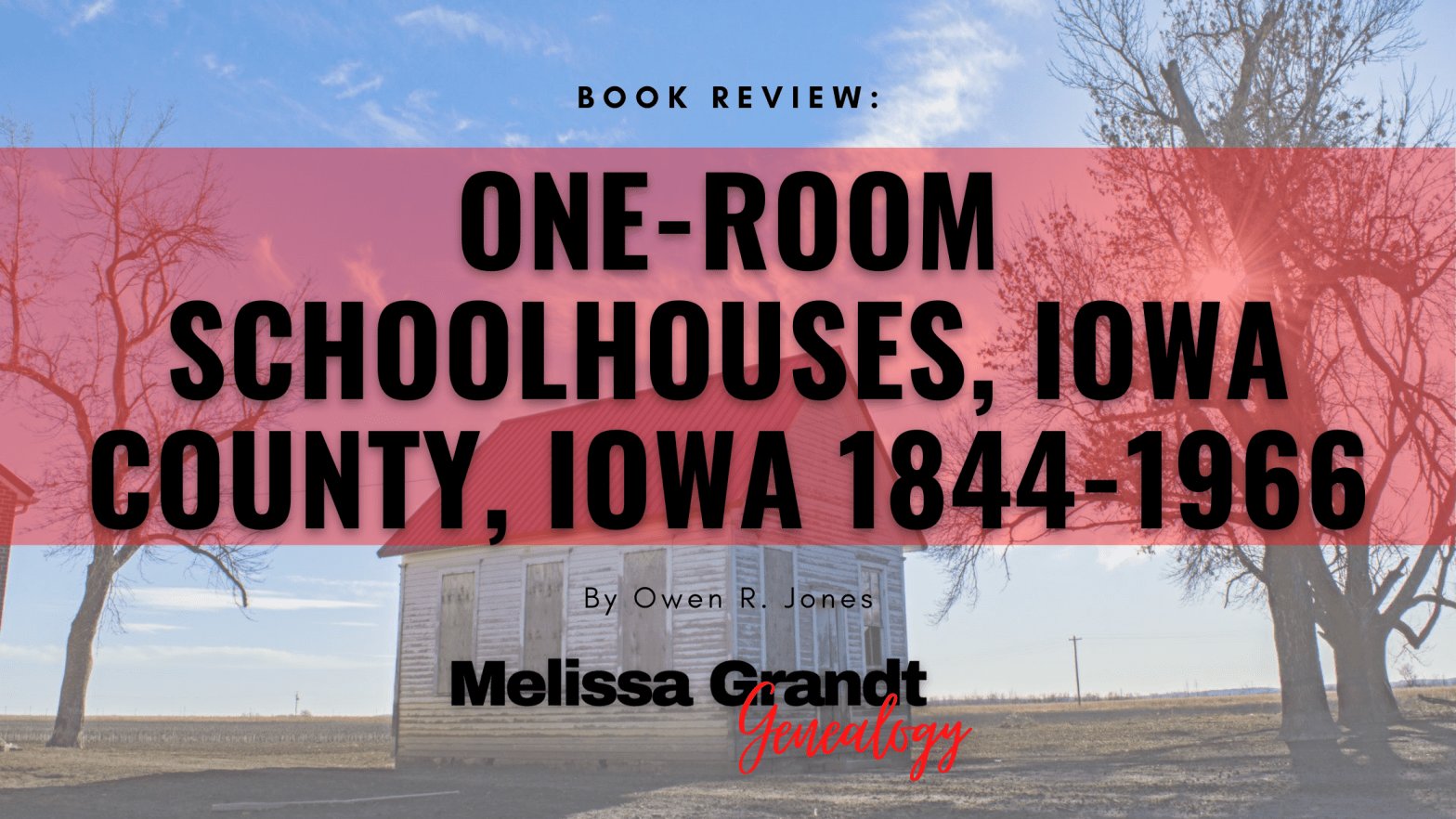
Book Review: One Room School Houses, Iowa County, Iowa 1844-1966

The book One Room School Houses, Iowa County, Iowa 1844-1966 by Owen R. Jones is a collection of photographs and memories from teachers and students of the rural schools of Iowa County, Iowa, mixed with copies of historic documents and maps. The book covers the basic history of education in the county and then takes a deeper dive into each township. It is a great resource for those who are researching ancestors in Iowa County.

“As the need arose, regular schoolhouses were built. The site of the new school could have been decided by accessibility to the majority of students being served or a donation of land…. A group of settlers would meet to cut the logs and split the shingles and then call more men to help with the ‘raising’…. These new schoolhouses served many purposes. The building housed prayer and church services, public meetings and elections and social functions.”

Owen R. Jones, One Room School Houses, Iowa County, Iowa 1844-1966 ([Iowa]? : 2012), p.6; OCLC #818672370.

The township sections of the book start with a map showing where each schoolhouse existed and when it opened and closed. In the detailed sections for each schoolhouse, readers will find some photographs of the building and students, sometimes even a teacher contract or report card, and memories from former teachers and staff. Each township concludes with a listing of 8th grade graduates by year (if there were records) and which school they attended.

Teachers were often any adult in the area that received some education.

“A 1923 Teaching Contract
The teacher will receive $75 a month for 8 months. Miss ___ agrees:
1) Not to get married. This contract becomes null and void immediately if the teacher marries.
2) Not to keep company with men.
3) To be home between the hours of 8 pm and 6 am unless in attendance at a school function.
4) Not to loiter downtown in ice cream stores.
5) Not to leave town at any time without the permission of the Chairman of the Board of Trustees.
6) Not to smoke cigarettes. This contract becomes null and void immediately if the teacher is found smoking.
7) Not to drink beer, wine or whiskey. This contract becomes null and void immediately if the teacher is found drinking beer, wine, or whiskey.
8) Not to ride in a carriage or automobile with any man except her brother or father.
9) Not to dress in bright colors.
10) Not to dye her hair.
11) To wear at least two petticoats.
12) Not to wear dresses more than two inches above the ankles.
13) To keep the schoolroom clean: 1) to sweep the classroom floor at least once daily; b) to scrub the classroom floor at least once weekly with hot water and soap; c) to clean the blackboard at least once daily; d) to start the fire at 7 am so the room will be warm at 8 am when the children arrive.
14) Not to use face powder, mascara or paint the lips. “

Owen R. Jones, One Room School Houses, Iowa County, Iowa 1844-1966 ([Iowa]? : 2012), p.9; OCLC #818672370.

Initially, the school year was three months long and was eventually extended to the nine month schedule we are familiar with today. However, if there was work to do at home, the children were allowed to stay home and work.

“Our one room school consisted of a pot-bellied stove, heated by coal. … The coal was carried in by the teacher and older children. On the cold winter mornings, we would keep our coats, overshoes and gloves on until the room had warmed. We had no electricity or indoor water. We took turns getting water from the outside pump for washing our hands and drinking. The furniture was a teacher’s desk, chair, reading table, a Victrola phonograph that ran by winding it by hand, chalkboards and 20 childrens’ desks…. Classes varied day by day and by grade but included spelling, arithmetic, penmanship, geography and history. In the summer when it was very hot we would have class outside under the trees. … Our restroom was an outhouse. In the winter we maneuvered to it through a deep path of snow (which the children shoveled) to find at times the door was frozen shut and maybe a mouse peering down from above the door. A catalog was our toilet paper.”

Owen R. Jones, One Room School Houses, Iowa County, Iowa 1844-1966 ([Iowa]? : 2012), p.121; OCLC #818672370.

If you have ancestors from Iowa County, Iowa – or even if you are just interested in what a typical school district would have been like – this book is a great resource for memories and photographs for the area. While out of print, you may be able to find a copy at a library near you.

Jones, Owen R. One Room School Houses, Iowa County, Iowa 1844-1966 ([Iowa]? : 2012); OCLC #818672370.

Similar books about one-room schoolhouses that you may also enjoy:

  1. Summit, NY One-Room Schoolhouses: also called Little Red or White, District, Rural or Common Schools by Karen McLaughlin Cuccinello.
  2. Visions and Voices: Montana’s One-Room Schoolhouses by Charlotte Caldwell.
  3. Reflections of a One Room Schoolhouse: My Life in the 1940s by Gary M. Hoffsommer.
  4. One-Room Schoolhouses of New Hampshire:: Primers, Penmanship & Potbelly Stoves by Bruce B. Heald PhD

Hey, just a heads up: My blog posts and email newsletters may contain affiliate links! If you buy something through one of these links, you won’t pay anything extra, but I’ll get a small commission, which helps me keep doing what I love. Thanks!
Six Ways to Involve Your Kids in Genealogy

Everyone wants their children and grandchildren to be interested in their personal history. But often, children – and even some adults – find the details boring, roll their eyes at yet another book, or may even tell you flat out that they don’t care. 

But the secret to getting our loved ones, especially the children, interested and engaged in their family history is to do it without them even realizing it. My children are 12 and 13 years old and have been “helping” me with research since they were toddlers. I have identified 6 key ways to keep them and their cousins interested and engaged.

Cater to their interests

Every person has something that fascinates them. And you can usually tie that into your history in some way. 

My niece is obsessed with the musical Hamilton right now. Well, we have very distant ties to Aaron Burr, the gentleman who shot Alexander Hamilton in 1804 and is a main character in the show. So, she was very excited to learn this and be able to share it with her friends. 

Find the veteran, the athlete, the artist, the musician, the scoundrel. What do they like? And do they have a family member involved? 

Vacation and Travel

This may seem obvious, but I don’t try to force these things. On vacations or road trips, I will often make a point of stopping at a particular site or location. 

Usually a conversation will happen in a few months or years and I refer back to “when we stopped at Jamestown…” or “Remember when you explored Andersonville and we learned about their lives there?…” And then we will pull out pictures and have a conversation about the experience again and how it ties to this family member. 

The types of places this may apply to includes: battlefields, historic sites, national parks and landmarks, heritage/birthplace cities, and more.

Cemeteries

When my children were small, cemetery research was one of the few things I could do with them in tow.

Establish rules. This was especially important when they were small.  

1) No running. You never know when a stone will be set into the ground or the land will have settled. 

2) No climbing on headstones. May seem obvious, but to children, these are tempting jungle-gyms. 

3) Wear bright clothing or a reflective vest like this one. Often we are in rural areas, so wearing hunting gear or other bright clothing can identify you as a human and not an animal for nearby hunters. 

Once they have heard the rules (again) and repeated them back to me (again), I would often send my children off with things to look for. Maybe I have them look for the stones with a flag in the ground beside them. Or find stones with a lamb on them. Once they were old enough to read, I would ask them to find specific names or I would have them do math to find out how old someone was when they died. 

These activities may seem like busy work, but with children sometimes you need to keep them busy, so you can do your work. And it can often open a conversation as to why those graves have flags. And anytime you can reinforce math or reading skills is a bonus! 

Games & Activities

I have had several games that I play with my kids, but their favorite was the one we would play in the car on the way to and from school. It didn’t have a name, really, but would just start as I would ask them to pick a family member, living or dead, and I would tell them a story about that person. 

I have told stories of doctors and of pioneers and even of my own mother’s high school basketball years. Every day, they would pick a new person to ask about. And if I didn’t necessarily know a specific story about “Grammy’s great-great-grandma”, I usually knew the time period they were alive and could come up with something. 

Another great activity is to cook some family recipes together. Put together a family cookbook and talk about why a particular dish is made that way or served at that time. 

School

I also have tied in several pieces of American history to their schoolwork, depending on the subject. 

For example, my kids are in the Chicago area and learn about the Great Chicago Fire of 1871 in school. After a trip to a city museum, I mentioned to my daughter that her 3x great grandfather lived in Chicago during the Great Fire. She was really intrigued and wanted to know where he lived and if he had lost his buildings, etc. It set us off on a search to learn more about it. 

I also have a large library of movies that I will pull out if they are showing interest in something this week. My youngest had all of these questions about the battle of Yorktown that she was learning about at school. While I know we had patriot ancestors, I have not fully traced their service yet to know if they were at Yorktown. So, we watched the movie The Patriot with Mel Gibson and discussed how our family member may have been affected or what their life may have been like. The movie helped bring the visuals to life for her imagination. 

Ask them to help you

One of my children loves to look at census records and other sources. And while she doesn’t always “act interested”, when she does I have her look at the Hints on my Ancestry Tree for a line that I will be researching soon. I have taught her how to look at known information we have and comparing it to what the Hint is suggesting, confirming if it is our people, etc. 

The key is to not force anything upon a child or another person and to stop the moment someone begins to show disinterest. Change tactics or use another strategy: 

  1. Cater to their interests
  2. Incorporate into travel
  3. Cemetery activities
  4. Games
  5. School
  6. Ask their help

By using one of these 6 strategies, or working a combination into your daily life, you will find that your children and grandchildren may be more receptive when you mention heading out to another cemetery. Or you may find the person to carry on your research in the future.

Another great resource are the series of books by Janet Hovorka, Zap the Grandma Gap. These are filled with activities and games to engage kids with their history. My oldest daughter especially enjoyed diving into the My German Ancestor Activity Book.

Hey, just a heads up: My blog posts and email newsletters may contain affiliate links! If you buy something through one of these links, you won’t pay anything extra, but I’ll get a small commission, which helps me keep doing what I love. Thanks!
Rootstech 2021

So, Rootstech is a conference about technology and genealogy. I have wanted to attend this conference since I first heard of it in 2010. And in recent years I have taken advantage of the live streaming or videos available.

But this year, Rootstech is 100% virtual and 100% free. I signed up the minute it was announced, blocked time in the calendar, and now I’m anxiously planning the keynote speakers and sessions I want to watch. What will I attend live? And what will I watch on replay?

Class sessions were announced this week and there are over 800 to check out! From beginner genealogy classes to advanced tech announcements to how to get your kids involved in genealogy.

So, this is a bit different than pre-COVID, as I don’t have to worry about travel arrangements, etc. But I am still excited and am working out work schedules and childcare, so I can attend some live.

What subjects would you be most interested in learning more about?

Planning a Research Trip

As the saying goes, “If you fail to plan, you plan to fail.” Or something like that. And in the world of genealogy research, it is especially true.

In general, a research plan is a roadmap to take you from a question to a conclusion. And as any good map or GPS navigation, it will keep you on track and not wandering down side streets and rabbit holes.

But a research trip requires special planning beyond that research plan – especially if you are going to be travelling out of town or out of state.

  1. Repository website – this is your first stop in planning. What are the hours for the location you are going to? Do they have parking and how much is it? Do they have photocopying or scanning services and how much is it? Can they scan to a USB drive? Are laptops, smartphones, or other devices allowed in the research area? Are gloves required? The questions to ask about the location can be endless. But this is important, because what if the location only allows a notebook and pencil? Or they’re closed for renovations? Know before you go.
  2. Catalog – While you’re on that website, see if they have a catalog of their collections and archives. Use this to create your research plan for the day.
  3. Join the Facebook group for the county or area. Ask the locals what shouldn’t be missed or what may help your research.
  4. Call ahead to the repository. Even if you have scoured the website, read every forum, it is still a good idea to call ahead and speak to a librarian or archivist. Websites may not be updated or maybe there is a local holiday and they will be closed. Currently, what are COVID-protocols for the area? They may not even be open to researchers. Take this time to discuss what you are researching and see if there are materials not cataloged, or if a particular collection needs to be taken from storage ahead of time – these are all things to find out ahead of time.
  5. Check the weather. Winter in the Midwest can be unpredictable. In planning a trip recently from the Chicago area to Wisconsin, I had to look at the weather in the week ahead – which threatened a snowstorm.

Good luck on your next research trip!

Where do I start?

I have conducted research for dozens of families, both my own, my husband’s, and clients’ families. But some of the people I talk to want to do the research themselves, they are just overwhelmed and don’t know where to start. Here is my advice:

  1. Talk to your living elders. Get their stories and information on the family.
  2. Write down everything you know, even if it’s unsure.
  3. Start with yourself or your parents and work backwards in time. Do not jump ahead.
  4. Once you have a basic tree established, determine what you want to know. Was there a story or military service? Or a rumor of a scandal? Start with that as your first objective.

Once you have an objective, start with basic research. Census records put individuals in a specific place and time. Church records and newspapers will start to build a community and traditions. And that is just the beginning.

I am also offering a 2-hour session to review what information you have already and make recommendations. Email me for more information!

What Services Do You Offer?

This has probably been the biggest question I have been getting since I started taking clients. And I think it comes from the general public not knowing what a genealogist or family researcher may be. Even I immediately think of an elderly person hunched over dusty tomes and microfilm readers. Granted, I do love spending time with old books and microfilm, but I hope I’m not seen as “old”.

But I have really had to think about the services that I will offer my clients. I have seen a lot of records and situations in my time doing research, but what do I feel strongest in? How do I feel drawn to help others?

  1. Research. Someone will often tell me a situation and I can see in my head the steps I would take to try and solve the question. So, obviously – this is a big one. Questions I have received:
    • “I want to know when my grandfather immigrated.”
    • “What did my great-grandmother do?”
    • “How did my family get from Vermont to Louisiana?”
    • “Can you help me find out if I’m related to [insert famous person here]?”
    • “I’ve heard my great-great uncle fought in the Civil War. How do I find out more?”
  2. DNA Analysis. Consumer DNA tests have become more popular as their price has come down in recent years. But sometimes, when the results come back, it’s hard to decipher what you are looking at. Or maybe you are hoping to find the answer to a specific question. Ways I use DNA in research:
    • Find biological family (parents, siblings, grandparents, etc)
    • Explain what the ethnicity estimates may mean and how they connect to paper research
    • Suggest which company to test through, based on what you want to know
  3. Teach and Guide. Maybe you want to do the research, but you have no idea where to start! I can review what you have and give direction, as well as be a point of support as you research.
  4. Organization. Have you inherited a large amount of documents and/or research from a family member? It’s so overwhelming that you’re tempted to toss it all? I can review the documents, organize it into a usable format – even scan the documents and make it easy for you to share with your family.
  5. Photo Identification. Sometimes you have images, but have no idea who it is or where it belongs in your family. And by narrowing down the date of the photograph, you can maybe put a name to the face! I have spent a lot of time analyzing types of photography, fashion, posing, photographers and may be able to guide you!
  6. Lecturing. Do you need a speaker for your organization or genealogy group? We can set up online webinars and I can present on topics from “Basic Research” to “Getting Your Kids Involved”. Ask me for my latest topics and rates.

So, how does this work?

Reach out to me and give me an idea of what kind of assistance you may need. I can provide you with a quote based on my current rates and we can go from there. I can even provide references, if needed. And then the fun begins!

Can’t wait to work with you!

Research post-1940

One of the backbones of research in the United States is the federal census. It has been taken every 10 years, starting back in 1790. However, census records are not released to the general public until 72 years after they are recorded. That means the most “recent” census genealogists have access to is the 1940 federal census.

But another significant piece in the genealogist’s toolbox these days is DNA. And if you are trying to connect a DNA match to somewhere in your family tree, often you need to be looking at “modern” records. Finding descendants down to the present day. So, if we can’t access one of the key resources for US research, what are the options? Make sure you have the following added to the locality guide you have created for each location you are researching.

  1. Newspapers
    • Newspapers are absolutely key if you are researching people after 1940. You want to find the obituaries for ancestors and see who is listed as a survivor. Read marriage and birth announcements, as well as social items like anniversary and birthday parties. Build a tentative descendant tree based on this information.
  2. Vital records
    • Some states will have vital records more accessible than others. Using the ancestors from the early 20th century, find marriage records, birth records. Line these up with the newspaper accounts and bring the tree forward.
  3. Church records
    • In states where the vital records may not be public, the church records may. In these cases, look for baptism, marriage, and death records. Some will list all family members as well.
  4. Probate and Wills
    • If these are accessible for the state you are researching, they will list heirs by name, including married names for women, possibly even with place of residence. All of these will lead you to more resources.
  5. Social media
    • In the 21st century of people living their lives online, search Facebook. Look through people’s Friends list to find the names you have uncovered above. You can often find other family members, siblings, children.

As you are building a descendancy tree, you will start to find where those DNA matches connect – and can bring your lines to the present.

New Beginning

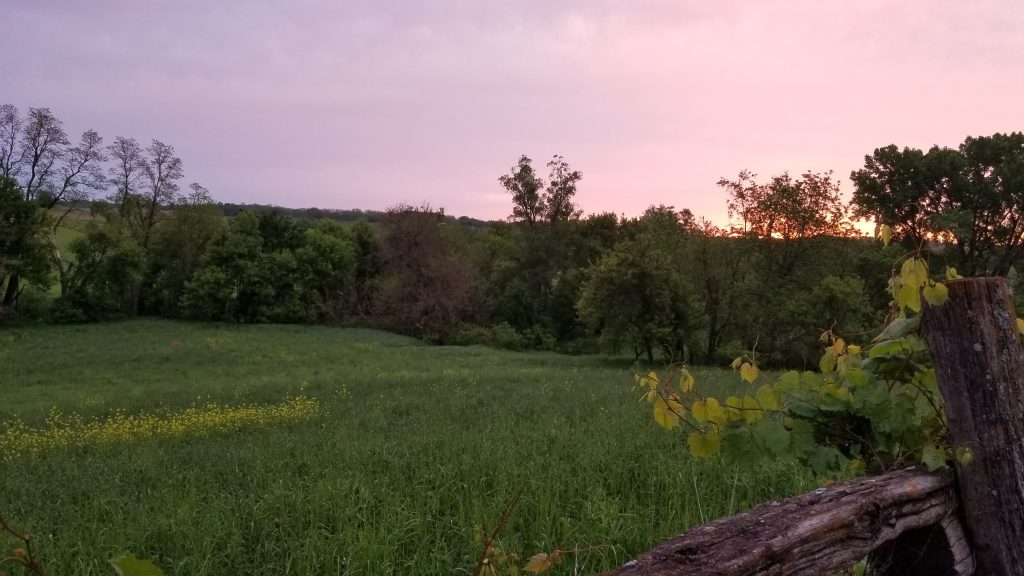
Iowa sunrise. ©Melissa Grandt, 2019.

September 1, 2020 starts a new era for me. Yesterday was the last day at a company that I have been a part of since I was 18 years old. The current COVID pandemic has ravaged the industry I was in and required our company to go in a new direction, restructure itself. And that resulted in my position being eliminated.

Today feels odd. A new routine. And new goals. But also a new hope.

Brings me to a new spot where I can focus on research, on speaking engagements, and on clients. New opportunities to serve those around me. New dreams. So, welcome to this new day.